Von: Digital in Berlin
Datum: Thu, 17 Sep 2026
Betreff: Thank you for a sold-out weekend in Moabit and Dahelm | Final Kiezsalon on Wednesday, 30 September
|
Von: Digital in Berlin
Datum: Thu, 17 Sep 2026
Betreff: Thank you for a sold-out weekend in Moabit and Dahelm | Final Kiezsalon on Wednesday, 30 September
|
Von: Lepa, Steffen via ak discourse
Datum: Wed, 16 Sep 2026
Betreff: [ak-discourse] WG: Ausschreibung einer freien Mitarbeit im Deutschen Musikinformationszentrum
das Deutsche Musikinformationszentrum (miz) sucht zum n䣨stm��chen Zeitpunkt eine freie Mitarbeit im Bereich Musikstatistik & empirische Sozialforschung (m/w/d).
Wir w䲥n Ihnen sehr dankbar, wenn Sie die beigefgte Stellenausschreibung insbesondere an fortgeschrittene wissenschaftliche Mitarbeitende, Postdocs sowie qualifizierte Selbstst䮤ige in Ihrem Institut bzw. Ihrem wissenschaftlichen Netzwerk weiterleiten sowie in Ihrem Institut aush䮧en k��en.
Wir machen auf die Stellenausschreibungen auߥrdem ber unsere Social-Media-Kan䬥(Instagram, Facebook und LinkedIn) aufmerksam und freuen uns ebenfalls sehr ber eine Weiterverbreitung auf diesen Kan䬥n.
Fr Rckfragen stehen wir Ihnen gerne zur Verfgung.
Mit bestem Dank und herzlichen Grߥn
Melissa Hauschild
Redaktionsassistenz
Deutsches Musikinformationszentrum (miz)
Kompass Musikstudium – ܢer 1.700 Studieng䮧e fr den Weg in den Musikberuf
| ENSEMBLES – Bundesjugendorchester | Bundesjugendchor | Bundesjazzorchester WETTBEWERBE – Jugend musiziert | Jugend jazzt | Deutscher Musikwettbewerb | German Conducting Award | Deutscher Orchesterwettbewerb | Deutscher Chorwettbewerb F֒DERUNG – Konzertf��rung Deutscher Musikwettbewerb | Forum Dirigieren | Podium Gegenwart | PopCamp SERVICE – Deutsches Musikinformationszentrum DEUTSCHER MUSIKRAT gGmbH |
| Demokratie sowieso! – eine Kampagne des Deutschen Musikrats |
Mit unserer Kommunikation m��en wir alle Menschen einschlieߥn, auch jene, die sich weder dem weiblichen noch m䮮lichen Geschlecht zuordnen. Wir freuen uns ber einen Hinweis, wie Sie angesprochen werden m��en.
Content of the attached PDF:
Ausschreibung
Freie Mitarbeit im Bereich Musikstatistik & empirische Sozialforschung (m/w/d)
Deutsches Musikinformationszentrum (miz) – Bonn | Start: zum nächstmöglichen Zeitpunkt
laufend auf Projektbasis | ca. 10–15 Stunden/Woche | 50 Euro/Stunde | überwiegend remote
Machen Sie mit uns aus Daten Wissen über das Musikleben! Sie können quantitative Daten fundiert
auswerten, Ergebnisse sicher interpretieren und komplexe Zusammenhänge verständlich vermitteln?
Sie bringen Erfahrung in empirischer Sozialforschung mit und interessieren sich idealerweise für
Musik, Kultur oder Kulturpolitik? Dann freuen wir uns auf Ihre Unterstützung.
Über uns
Das Deutsche Musikinformationszentrum (miz), getragen vom Deutschen Musikrat, ist das
nationale Kompetenzzentrum für das Musikleben in Deutschland. Es führt Studien und statistische
Daten zusammen, prüft, systematisiert und analysiert sie und vermittelt die Ergebnisse verständlich
und frei zugänglich. Wo belastbare Informationen fehlen, konzipiert und beauftragt das miz eigene
Studien.
Ihre Aufgaben
Sie unterstützen den Statistikreferenten des miz projektbezogen bei der Aufbereitung,
Auswertung und Vermittlung von Daten zum Musikleben. Dazu können gehören:
– Aufbereitung, Bereinigung und Plausibilitätsprüfung quantitativer Daten
– Statistische Auswertung und Interpretation eigener Erhebungen sowie amtlicher,
wissenschaftlicher und verbandlicher Daten
– Zusammenführung und Vergleich unterschiedlicher Quellen und Erhebungszeiträume
– Mitwirkung an empirischen Studien – von Fragestellungen, Indikatoren und
Erhebungsinstrumenten bis zum Auswertungsplan
– Begleitung extern beauftragter Studien und Prüfung von Datensätzen, Methodenberichten
und Ergebnissen
– Entwicklung von Tabellen, Kennzahlen und Visualisierungskonzepten
– Verständliche Ergebnisaufbereitung, Dokumentation und Qualitätssicherung
Ihr Profil
– Hochschulabschluss oder vergleichbare Qualifikation mit Schwerpunkt empirische
Sozialforschung, Statistik, quantitative Methoden oder einem verwandten Bereich
– Fundierte Erfahrung in Aufbereitung, Auswertung und Interpretation quantitativer Daten
– Sicherer Umgang mit deskriptiver Statistik, Analysesoftware (vorzugsweise R) und
Tabellenkalkulationsprogrammen ( z. B. Excel)
– Fähigkeit zur präzisen und adressatengerechten Vermittlung statistischer Ergebnisse
– Sorgfältige, strukturierte und eigenverantwortliche Arbeitsweise sowie sehr gute
Deutschkenntnisse
Kenntnisse des Musiklebens oder der Kulturpolitik sind ausdrücklich erwünscht, aber keine
Voraussetzung.
Zusammenarbeit & Bewerbung
Wir bieten eine fachlich anspruchsvolle, kulturpolitisch relevante Tätigkeit in einem interdisziplinären
Team. Die Zusammenarbeit erfolgt laufend auf Projektbasis, überwiegend remote und – abhängig vom
jeweiligen Projekt und Absprache – im Umfang von durchschnittlich ca. 10 bis 15 Stunden pro Woche.
Das Honorar beträgt 50 Euro pro Stunde; Abstimmungen finden digital oder bei Bedarf in Bonn statt.
Bitte senden Sie eine kurze Bewerbung mit Lebenslauf, kurzem Motivationsschreiben, Angaben zu
methodischem Wissen und Erfahrungen mit Analysesoftware, zeitlicher Verfügbarkeit sowie
möglichst einem oder zwei Arbeitsbeispielen (zusammengefasst/verlinkt) als eine PDF-Datei mit
dem Betreff „Freie Mitarbeit Musikstatistik“ an bewerbungen@miz.org. Bewerbungen werden
fortlaufend geprüft; die erste Sichtung erfolgt am 30. September 2026.
Rückfragen: Stephan Schulmeistrat, Leiter des miz | 0228 2091-180 | schulmeistrat@musikrat.de
www.miz.org | www.musikrat.de
Der Deutsche Musikrat (DMR) ist der weltweit größte nationale Dachverband des Musiklebens und steht
unter der Schirmherrschaft von Bundespräsident Frank-Walter Steinmeier. Die Deutscher Musikrat gGmbH
ist mit rund 65 Mitarbeiter:innen ein Kompetenzzentrum für Musikförderung in Deutschland.
Der Deutsche Musikrat fördert aktiv die Gleichstellung. Wir begrüßen Bewerbungen unabhängig von
kultureller und sozialer Herkunft, Alter, Religion, Weltanschauung, Behinderung oder sexueller Identität.
Wir verarbeiten und speichern personenbezogene Daten zur Durchführung des Auswahlverfahrens. Die
Bewerbungsunterlagen werden anschließend unter Beachtung der datenschutzrechtlichen
Bestimmungen vernichtet.
Von: HELLERAU – Europäisches Zentrum der Künste
Datum: Wed, 16 Sep 2026
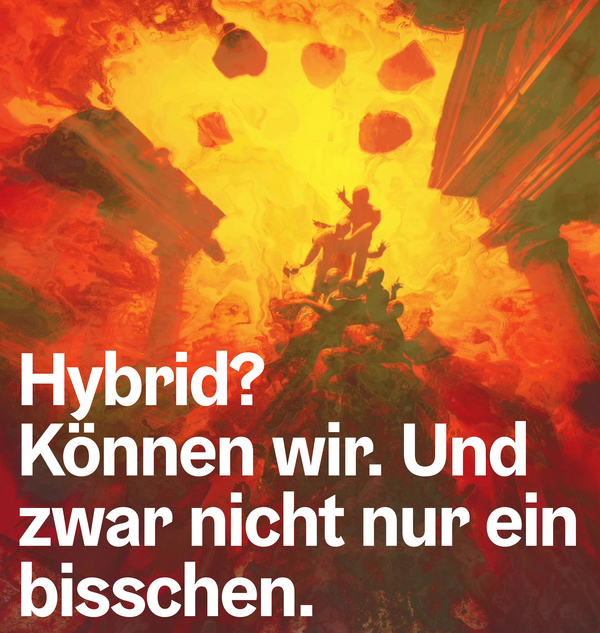
Betreff: Oktober? Wird hybrid.
|
||||||||||||||||||||||||||||||||||||||||||||||||||||||||||||||||||||||||||||||||||||||||||||||||||||||||||||||||||||||||||||||||||||||||||||||
|
||||||||||||||||||||||||||||||||||||||||||||||||||||||||||||||||||||||||||||||||||||||||||||||||||||||||||||||||||||||||||||||||||||||||||||||
|

Von: Wolke Verlag
Datum: Wed, 16 Sep 2026
Betreff: Esther Abramis Buch erscheint am 23. September – jetzt vorbestellen
|
Von: ak, sekretariat
Datum: Tue, 15 Sep 2026
Betreff: [ak-discourse] Einladung zum Forschungskolloquium am 22.09.2026 / 17:00 Uhr
Liebe Freunde der Audiokommunikation,
am kommenden Dienstag, den 22.09.2026, um 17:00 Uhr präsentiert Raphaël Gillioz seine Arbeit zum Thema:
„Implementation of a Secondary Free-Field Calibration for Microphones in Non-Anechoic Environments “
Dazu möchten wir Sie herzlich einladen. Die Kurzzusammenfassung finden Sie am Ende dieser E-Mail.
Ausnahmsweise findet der Vortrag nur online statt. Der Zoom-Link lautet:
tu-berlin.zoom.us/j/65356423211
Meeting-ID: 653 5642 3211
Kenncode: 141962
–
Mit herzlichen Grüßen
Kirill Andreev & Stefan Weinzierl
___
Raphaël Gillioz: Implementation of a Secondary Free-Field Calibration for Microphones in Non-Anechoic Environments
Some measurement microphones cannot be calibrated with the usual secondary techniques, and free-field calibration, conventionally bound to an anechoic chamber, remains their only route to traceability. This talk presents the implementation and metrological qualification of a secondary free-field calibration in an ordinary production room, using time-gated logarithmic sweeps with regularised deconvolution, benchmarked against reference measurements in an anechoic chamber. The talk examines what actually limits such a calibration once the anechoic chamber is removed: the acoustic environment, the gating window, or the sound source itself. The results include a complete uncertainty budget, a comparison of the two environments, a sine-fitting technique for the low-frequency end, and an effect of the loudspeaker that the published literature on non-anechoic calibration does not report.
___
Kirill Andreev
Er/ihm – he/him
Anrede/Form of address: Herr – Mr.
Sekretariat / Office
Technische Universität Berlin
Fakultät I / Inst. f. Sprache u. Kommunikation
FG Audiokommunikation / Sekr. EN-8
Faculty I / Institute for Language & Communication
Audio Communication Group / Office No. EN-8
Einsteinufer 17, 10587 Berlin
GERMANY
sekretariat@ak.tu-berlin.de
+49 (0)30 314-22236
Erreichbarkeit: Di, Do 9-17 Uhr, Fr. n. V.
https://www.tu.berlin/ak
Von: Lepa, Steffen via ak discourse
Datum: Fri, 11 Sep 2026
Betreff: [ak-discourse] WG: PhD and PostDoc Positions at ELLIS Institute Finland – Possibilities in Machine Learning and AI for Music
PhD and PostDoc Positions at ELLIS Institute Finland – Possibilities in Machine Learning and AI for Music
ELLIS institute calls for PhDs and PostDocs for 2026 is open. The candidates select supervisors in these calls, and I am one of the ELLIS PIs listed in the supervisors lists.
https://www.ellisinstitute.fi/postdoc-and-phd-recruit-autumn-2026
I am interested in working with candidates who want to pursue a PhD or PostDoc in Machine Learning and AI in music. Topics include deep generative modelling for music or other musical AI topics, music information retrieval, bias and representation studies in deep generative models for music, artistic technology research with machine learning and AI in music, critical computing in artistic music research, and computational creativity research in music.
Candidates will be joining a new research group on machine learning and AI for music and the arts, at the Research Institute at University of the Arts Helsinki in addition to a second affiliation with ELLIS Institute Finland located at Aalto University. This double affiliation provides a unique opportunity to pursue research in music while being connected to a well-connected AI institute.
I am interested in working with candidates with experience in machine learning, specifically deep learning and deep generative modelling, and experience in music or music technology. At ELLIS, we are looking for candidates with previous experience in machine learning, statistics, artificial intelligence, or a related field, preferably demonstrated by strong performance in relevant studies (doctoral student applicants) and/or publication record (postdoc applicants). Experience in music relevant practices or previous collaborations in artistic projects is a plus.
For any questions or discussions on potential topics, please feel free to reach out to me. Please note that this call does not accept applications through email.
Key information about the positions:
Please find the full details of the call as well as the link to the application portal at the links below.
ELLIS Institute Finland hiring: postdocs and PhD students in AI and machine learning.Deadline is Sept. 21st, 2026.
– Cutting-edge computational resources like LUMI AI Factory
– Close collab within ELLIS
– Ambitious, high-impact projects across Finland
https://www.ellisinstitute.fi/postdoc-and-phd-recruit-autumn-2026
Want to turn frontier research into a startup? ELLIS Institute Finland offers anentrepreneurial postdoc track for recent PhDs who want to evolve science into real-world ventures, in areas like AI4Science. Apply by September 21st, 2026:
https://www.ellisinstitute.fi/entrepreneurial-postdoc-recruit-autumn-202
—
Kıvanç Tatar, Ph.D.
Multimedia Artist / Researcher in Artificial Intelligence for Music and New Media
https://kivanctatar.com/
Von: Lepa, Steffen via ak discourse
Datum: Thu, 10 Sep 2026
Betreff: [ak-discourse] WG: CFP -SIPP 2026
14th International Conference on Signal, Image Processing and Pattern Recognition (SIPP 2026)
November 21 ~ 22, 2026, London, United Kingdom
https://ccsit2026.org/sipp/index
Scope
14th International Conference on Signal, Image Processing and Pattern Recognition (SIPP 2026) is a forum for presenting new advances and research results in the fields of Signal and Image Processing. The conference will bring together leading researchers, engineers and scientists in the domain of interest from around the world
Authors are solicited to contribute to the conference by submitting articles that illustrate research results, projects, surveying works and industrial experiences that describe significant advances in the following areas, but are not limited to.
Topics of interest include, but are not limited to, the following
Important Dates
Contact Us
Here’s where you can reach us : sipp@ccsit2026.org
Von: Gerriet K. Sharma
Datum: Thu, 3 Sep 2026
Betreff: „Crushed Now – After Turing // Beyond Presence“ Konzert 04 im Funkhaus Nalepastraße Berlin
Liebe Kolleginnen und Kollegen,
Dear friends and colleagues,
(English version below)
ich möchte Euch auf die vierte Ausgabe unserer Konzertreihe
„Crushed Now – After Turing // Beyond Presence“
Thema des Abends:
Vokale Systeme
aufmerksam machen:
Konzert 04:
Datum: SO 13.09.2026
Beginn: 18:00 Uhr (Einlass: 17:30 Uhr)
Ort: Kultursaal, Funkhaus Nalepastraße 18, Berlin
Mit:
Isabelle Duthoit – Vokale Live-Transmutationen von Artikulation (György Ligeti, 1958) & Seascape (Fausto Romitelli, 1994) mit Mikrofon, 4 Kanal-Lautsprechersystem und Ghettoblaster
Verena Lercher & Mikolaj Szatko – pasdedeuX (2025) performative Klanginstallation mit 16 Turntables, Vinyls mit Klängen ausgemusterter Medien und künstlichen Stimmen.
Susanne Fröhlich – Seascape, Fausto Romitelli (1994) für Paetzold Kontrabassblockflöte & IRA, Sarah Nemtsov (2013) für Paetzold Kontrabassblockflöte und Klänge des Berliner Hbf.
delta sirens, 4-Kanal Raum-Klangkomposition für synthetische Stimmen und ME RL900 Geithain-Lautsprecher, Verena Lercher & TRRSX (2023)
Boris Eldagsen – KI-generierte audiovisuelle Installation zum Thema „Vokale Systeme“ (2026)
Weitere Informationen & Tickets: www.crushednow.com
Die Reihe umfasst fünf Konzertabende im Jahr 2026 und wird von der Initiative Neue Musik (inm) sowie dem Funkhaus Berlin unterstützt.
Ich würde mich sehr freuen, Euch bei einer der Veranstaltungen zu sehen!
Herzliche Grüße
Gerriet Krishna Sharma
—–
Dear friends and colleagues,
I would like to draw your attention to the fourth edition of our concert series
“Crushed Now – After Turing // Beyond Presence”
The theme of the evening:
Vocal Systems
Concert 04
Date: Sunday, September 13, 2026
Start: 6:00 pm (doors open at 5:30 pm)
Venue: Kultursaal, Funkhaus Nalepastraße 18, Berlin
Featuring:
Isabelle Duthoit – Vocal live transmutations of Artikulation (György Ligeti 1958) & Seascape (Fausto Romitelli, 1994), using microphone, a 4-channel loudspeaker system and a boombox
Verena Lercher & Mikolaj Szatko – pasdedeuX (2025), a performative sound installation with 16 turntables, vinyl records featuring sounds from discarded media, and artificial voices
Susanne Fröhlich – Seascape, Fausto Romitelli (1994) for Paetzold contrabass recorder & IRA, Sarah Nemtsov (2013), for Paetzold contrabass recorder and sounds from Berlin main station
delta sirens – 4-channel spatial sound composition for synthetic voices and ME RL900 Geithain loudspeakers, Verena Lercher & TRRSX (2023)
Boris Eldagsen – AI-generated audiovisual installation on the subject of „Vocal Systems“
Further information & tickets:
www.crushednow.com
The series comprises five concert evenings in 2026 and is supported by the Initiative Neue Musik (inm) and Funkhaus Berlin.
I would be glad to see you at one of the events!
Warm regards,
Gerriet Krishna Sharma
.
Gerriet Krishna Sharma
www.gksh.net
www.spaes.org
www.ikoweave.com
instagram: gksh_lab
facebook: GerrietKSharma
phone: +491752449300
.
Von: Jakob Gille
Datum: Wed, 29 Jul 2026
Betreff: Symposium für räumlichen Klang 11–23.08.26 Heymannbaude, Sachsen
Summer Lab 2026 is a two-week international laboratory for spatial sound, Ambisonics, and immersive audio, taking place 11-23 August 2026 at Heymannbaude in Kleinhennersdorf (Saxon Switzerland, Germany).
The programme opens with a three-day soundsystem assembly workshop (11-13 August), where participants will collectively build and calibrate the open-source OTTOsonics 24-channel Ambisonic system under the guidance of Manu Mitterhuber.
This is followed by a public opening concert (14.8.) and an eight-day symposium (15-22 August) featuring workshops on spatial audio, field recording, acoustic ecology, immersive listening, soundscape composition, and computational sound led by Ben Wesch, Ida Hiršenfelder (beepblip), Jakob Gille, Martin Ožvold, Anthea Caddy, and Marcin Pietruszewski.
More information and registration:
https://phonon.cz/
https://www.instagram.com/phonon.crew/
https://eventfrog.de/de/p/diverses/ambisonic-summer-lab-2026-7483062897574174687.html
Beste Grüße
Jakob Gille
Von: Festival BLAUES RAUSCHEN
Datum: Sat, 4 Jul 2026
Betreff: WDR 3 radio program on July 5 | Festival BLAUES RAUSCHEN 2026
|
||||||||||||||||||||||||||||||||||||||||||||||||||||||||||||||||||||||||||||||||||||||||||||||||||||||||||||||||||||||||||||||||||||||||||
Von: Gerriet K. Sharma
Datum: Sat, 20 Jun 2026
Betreff: Einladung/Inivtation: Crushed Now – After Turing // Beyond Presence – neue Konzertserie im Funkhaus Nalepastraße Berlin
Liebe Kolleginnen und Kollegen,
(English version below)
ich möchte Euch auf die dritte Ausgabe unserer Konzertreihe
„Crushed Now – After Turing // Beyond Presence“
aufmerksam machen:
Konzert 03: Distributed Presence
Datum: 28.06.2026
Beginn: 18:00 Uhr (Einlass: 17:30 Uhr)
Ort: Kultursaal, Funkhaus Nalepastraße 18, Berlin
Mit:
Francesco Palmieri – Gitarre mit S.T.OOGE, einem eigens entwickelten tetraedrischen Prototypen, der nach außen abstrahlende sowie Ambisonics nutzt.
Auf dem Programm stehen Werke von Fausto Romitelli, Hugues Dufourt und Marco Momi.
Reinhold Friedl – Inside Piano auf dem Neo-Bechstein, einem seltenen und wegweisenden elektroakustischen Klavier aus den frühen 1930er Jahren.
Gerriet Krishna Sharma – Live-Spatialisierung mit zwei 3-9-3-Lautsprecherarrays. Mittels Beamforming werden Phantomschallquellen direkt auf die reflektierenden Oberflächen des Raumes projiziert.
Boris Eldagsen – KI-generierte audiovisuelle Installation zum Thema Distributed Presences.
Weitere Informationen & Tickets: www.crushednow.com
Die Reihe umfasst fünf Konzertabende im Jahr 2026 und wird von der Initiative Neue Musik (inm) sowie dem Funkhaus Berlin unterstützt.
Ich würde mich sehr freuen, Euch bei einer der Veranstaltungen zu sehen!
Herzliche Grüße
Gerriet Krishna Sharma
.
Dear friends and colleagues,
I would like to draw your attention to the third edition of our concert series
“Crushed Now – After Turing // Beyond Presence”
Concert 03: Distributed Presence
Date: 28.06.2026
Start: 6:00 PM (doors open at 5:30 PM)
Venue: Kultursaal, Funkhaus Nalepastraße 18, Berlin
Featuring:
Francesco Palmieri – guitar using S.T.OOGE, a custom-developed tetrahedral prototype employing outward-radiating and Ambisonics.
The programme includes works by Fausto Romitelli, Hugues Dufourt, and Marco Momi.
Reinhold Friedl – inside piano performance on the Neo-Bechstein, a rare and pioneering electro-acoustic piano from the early 1930s.
Gerriet Krishna Sharma – live spatialisation using two 3-9-3 loudspeaker arrays. Through beamforming, phantom sound sources are projected directly onto the room’s reflective surfaces.
Boris Eldagsen – AI-generated audiovisual installation on the subject of Distributed Presence.
More information & tickets: www.crushednow.com
The series comprises five concert evenings in 2026 and is supported by Initiative Neue Musik (inm) and Funkhaus Berlin.
I would be very pleased to see you at one of the events.
With best wishes,
Gerriet Krishna Sharma
.
Gerriet Krishna Sharma
www.gksh.net
www.spaes.org
www.ikoweave.com
instagram: gksh_lab
facebook: GerrietKSharma
phone: +491752449300
.
Von: Kiezsalon by Digital in Berlin
Datum: Wed, 03 Jun 2026
Betreff: Tomorrow: Kiezsalon x DAS MINSK begins | Next week w/ Muslim Shaggan and Martha Skye Murphy
|
Von: Johannes S. Sistermanns
Datum: Tue, 2 Jun 2026
Betreff: hr2 ‚Der Nachmittag der Dinge‘ – NYCEMF 2026 New York ‚we are only the present‘ – Ö1 ‚raumtief‘ – SWR KULTUR ‚Immer jetzt‘
Radio Hessischer Rundfunkin: The Artist’s CornerUrsendung des neuen radiiofonen HörstückesD e r N a c h m i t t a g d e r D i n g e
06.06.2026 23:00 Uhr/ / / / / / / / / / / / / / / / / / / / / / / / / / / / / / / / / / / / / / / / / / / / / / / / / / / / / / / / / / / / / / / / / / / / / / / / / / / / / / / / / / / / / / / / / / / / /
New York City Electroacoustic Music FestivalWednesday, June 24WE ARE ONLY THE PRESENTmultiple electroacoustic composition
Abrons Arts Center Manhattan/ / / / / / / / / / / / / / / / / / / / / / / / / weiterhin online / / / / / / / / / / / / / / / / / / / / / / / / / / / / / / /O R F S O U N D W I E Nin: Ö1 Hörspiel und Radiokunstr a u m t i e f
+ E i n f ü h r u n g s – G e s p r ä c h/ / / / / / / / / / / / / / / / / / / / / / / / / / / / / / / / / / / / / / / / / / / / / / / / / / / / / / / / / / / / / / / / / / / / / / / /Ars AcusticaImmer jetzt
Sendungen 28.09.2024 / 18.09.2026
s c h w e i g N 2025
TONSPUR_passage | Micro Museum for Sound / Kunstverein Wien
/
EXPO OSAKA 2025 Deutscher Pavillon/German Pavilion‚FU N G A L E N T A N G L E M E N T‘‘Video Helga Griffiths / Johannes S Sistermanns [Komposition]
__________________________
Johannes S. Sistermanns
mobil +49 (0)172.2999771site www.sistermanns.eu
vimeo channel https://vimeo.com/sistermanns
Wikipedia https://de.wikipedia.org/wiki/Johannes_S._Sistermanns
Von: anja erdmann
Datum: Sat, 16 May 2026
Ausstellung: Saline 34 goes DEF.Inition / Vernissage: 16.05. ab 18 UHR / Petersberg Erfurt
Von: Matthias Entreß
Datum: Fri, 15 May 2026
Betreff: Radiotipp: Die Baltic Music Days – meine Reportage auf DLF-Kultur, Montagabend 5 nach 12

Liebe Radiofreunde, das Bild zeigt den „Großen Bernstein“, den wunderbaren Konzertsaal in der Stadt Liepaja, Lettland, an der Ostsee. Dort fanden drei, später in Riga weitere Konzerte der „Baltic Music Days“ statt, die jährlich wechselnd in Litauen, Lettland und Estland stattfinden und natürlich vor allem KomponistInnen und Werke aus diesen drei Ländern vorstellen. Ich hatte die Ehre und das Vergnügen, das Festival besuchen zu können und eine etwas andere neue Musik und ihre Macher kennenlernen zu dürfen und habe darüber eine Sendung gemacht, die kommenden Montagabend 5 nach 12 auf DLF-Kultur gesendet wird. (nominell also Di., 19.5.2026 um 00.05 Uhr) Danach bleibt sie aber auf der Mediathek der „Neuen Musik“ auf DLF-K erhalten (https://www.deutschlandfunkkultur.de/neue-musik-100.html), wo sie auch live gestreamt wird.
Ich würde mich freuen, Sie dann an Ihren Geräten begrüßen zu dürfen.
Herzlichst Ihr
Matthias R. Entreß
Von: Festival BLAUES RAUSCHEN
Datum: Fri, 15 May 2026
Betreff: Coming soon | May 29: Festival Opening BLAUES RAUSCHEN
|
|||||||||||||||||||||||||||||||||||||||||||||||||||||||||||||||||||||||||||||||||||||||||||||||||||||||||||||||||||||||||||||||||||||||||||||||||||||||||||||||||||||||||||||||||||
Von: Südtirol Jazzfestival Alto Adige via Judith Kobus
Datum: Fri, 15 May 2026
Betreff: Südtirol Jazzfestival Alto Adige 2026 – das Programm ist online
Südtirol Jazzfestival Alto Adige 2026
26. Juni bis 05. Juli 2026 – Das Unvorhersehbare als Leitmotiv
Das Südtirol Jazzfestival Alto Adige versteht sich 2026 einmal mehr als weit verzweigtes Labor für die Musik der Gegenwart, in dem das Unvorhersehbare zum Leitmotiv wird. Mit neuen Spielorten, offenen Projekten und ungewöhnlichen Konzertformaten entsteht ein bewegliches Netzwerk aus Klang, Landschaft und Begegnung. Die diesjährige Ausgabe verbindet internationale Impulse und zeitgenössischen Jazz mit experimenteller Clubkultur, kollektiver Improvisation und Konzerten mitten in der Natur.
Vom Großensemble in die Landschaft
Den Auftakt macht das gewaltige Gard Nilssen Supersonic Orchestra. Das Großensemble liefert jedoch nicht nur eine fulminante Eröffnung, sondern prägt das Festival weit über den ersten Abend hinaus. Wie bei einer musikalischen Zellteilung lösen sich die Musiker:innen aus dem orchestralen Verbund und bespielen in wechselnden Konstellationen verschiedene Räume und Orte des Festivals – etwa als Supersonic Horns bei der Silvesterkapelle im Langental.
Aus dieser Dynamik heraus entfaltet sich ein weit verzweigtes Konzertprogramm, das internationale Projekte und improvisatorische Begegnungen durch ganz Südtirol führt. So trifft etwa Team Hegdal auf urbane Zwischenräume wie den Alcide-Berloffa-Park, während Goran Kajfeš Subtropic Arkestra den Waltherplatz mitten in Bozen bespielt. Das Trio Spins & Spells wiederum verlegt sein Konzert in die Brennerei Roner, und Anaïs Drago führt das Festival tief hinein in die alpine Landschaft, wo der Klimastollen Prettau mit seiner rohen Akustik selbst Teil der Musik wird.
Neue Orte und vertraute Bühnen
Zudem erweitert das Festival seine Landkarte um zahlreiche neue Spielorte. Erstmals Teil des Programms sind das AHOI-Minigolf, die Pferderennbahn Meran, die Freie Universität Bozen, der historische Gasthof zum Hirschen, das Hotel Bad Ratzes, das Guggenberg, eine musikalische Wanderung zum Schneeberg sowie die Seebühne beim Wunderwald in Klobenstein. Auch die Stiftskirche Gries und abgelegene Naturkulissen verwandeln sich für kurze Zeit in Bühnen für aktuelle Musik.
Gleichzeitig bleiben viele vertraute Orte fixer Bestandteil des Festivals. Konzerte finden erneut unter anderem im Parkhotel Laurin, in der Messe Bozen, im harpf Getränkeladen, am Stadtplatz Sterzing, im Parkhotel Holzner, beim Gasthof Jocher am Vigiljoch, im Ost West Club und im Batzenhäusl statt. Damit spannt sich das Festival erneut über ganz Südtirol – von Bozen über Meran, Brixen und Bruneck bis in entlegene Täler und Berglandschaften.
Offenheit, Improvisation und Clubkultur
Mit den „Sonic Reactions“ bietet das Festival ein Format grundlegender Offenheit, wenn sich Musiker:innen erstmals ganz ohne Vorbereitung auf der Bühne begegnen. In intimen Kurzkonzerten entstehen musikalische Blind Dates, bei denen spontane Reaktion und unmittelbare Kommunikation im Zentrum stehen. Auch die Late-Night-Reihe folgt dieser Idee, wenn sich das Festival in Richtung Clubkultur, elektronischer Klänge und hybrider Konzertformen öffnet, ohne dabei den improvisatorischen Kern aus den Augen zu verlieren.
Das Spektrum reicht dabei von elektroakustischen Grenzgängen über kompromisslose Improvisation bis zu tanzbaren Formen zwischen Jazz, Clubmusik und experimentellem Pop. Künstler:innen wie Anaïs Drago, Elektro Guzzi, LVDF, O.N.E. oder Kit Downes stehen exemplarisch für ein Programm, das stilistische Grenzen nicht einfach bestätigt, sondern bewusst unterwandert.
Projekte, Rituale und neue Begegnungen
Auch in diesem Jahr setzt das Festival wieder auf die Zusammenarbeit mit jungen Musiker:innen aus der Euregio. Unter der Leitung von Laura Zöschg entsteht ein neues grenzüberschreitendes Projekt, das Künstler:innen aus Südtirol, Tirol und dem Trentino zusammenbringt und Raum für gemeinsame musikalische Entwicklungen und neue künstlerische Begegnungen schafft.
Dass sich das Festival zunehmend als sozialer und räumlicher Organismus versteht, zeigt auch das „Kabarila Jazz Ritual“. Das vom Festival initiierte Langzeitprojekt erreicht seine vierte Stufe: fünf Jahre, fünf Stunden – ein kollektives Ritual zwischen Konzert, Performance und Grenzerfahrung.
Die Kooperation mit dem Film Festival Bozen setzt zudem den Dialog mit anderen Künsten fort: Matteo Paggi und Andrea Grossi entwickeln live einen Soundtrack zu einer katalanischen Stummfilm-Sammlung und machen das Kino für einen Abend zum Ort improvisierter Klangkunst.
Musik in Bewegung
Gleichzeitig schlägt das Festival immer wieder Brücken in die Natur. Viele Konzerte führen aus den klassischen Sälen hinaus in Wälder, auf Almen oder an entlegene Orte in den Bergen. Wenn Matthias Schriefl mit seinem Projekt „Brazilian Motions“ Musiker:innen und Publikum gemeinsam aufsteigen lässt, wird die Wanderung selbst Teil der Komposition. Auch das Sheen Trio oder das Duo von Sissel Vera Pettersen und Eirik Hegdal nutzen die alpine Topografie nicht bloß als Kulisse, sondern als akustische Mitspielerin.
Das Südtirol Jazzfestival Alto Adige zeigt damit einmal mehr, dass Jazz vor allem dort spannend wird, wo er Räume schafft: zwischen Menschen, Orten und Erwartungen. In dieser Offenheit liegt die besondere Stärke des Festivals, das musikalische Erfahrung nicht als Konsum, sondern als Abenteuer des Hörens begreift.
Das vollständige Programm ist jetzt online unter www.suedtiroljazzfestival.com verfügbar.
Fotos Gard Nilssen Supersonic Orchestra (Eröffnungskonzert): https://www.dropbox.com/scl/fo/vd8t7oixrvx01r0gby067/AKMWSwfWj_4UwKHnP0d5tsU?rlkey=jz0qaz44y5u3ejzuughg1c9ob&dl=0
Alle Bandfotos 2026: https://www.dropbox.com/scl/fo/51rn7dyh7erjk4k6g654y/AKOJftg3jRXZs5T_h4Vy_V8?rlkey=65oanstm4x0m0y2mz3i0lh3ij&dl=0
Jazz Music Promotion
Südtirol – Alto Adige
Laubengasse 19/A Via Portici
I-39100 BOZEN – BOLZANO
T +39 0471 98 23 24
info@suedtiroljazzfestival.com | info@altoadigejazzfestival.com
www.suedtiroljazzfestival.com
MwST.-Nr./P.IVA IT 0 2 4 3 5 8 4 0 2 1 6
Von: ak, sekretariat via ak discourse
Datum: Fri, 15 May 2026
Betreff: [ak-discourse] Einladung zum Forschungskolloquium am 19.05.2026 / 17:00 Uhr
Liebe Freunde der Audiokommunikation,
am kommenden Dienstag, den 19.05.2026, um 17:00 Uhr im Raum EN 324 präsentiert Johannes Hofmann seine Arbeit zum Thema:
„Golden Ears – Spectral Cues To Enhance a Parametric HRTF“
Dazu möchten wir Sie herzlich einladen. Die Kurzzusammenfassung finden Sie am Ende dieser E-Mail.
Der Zoom-Link für unsere auswärtigen Gäste lautet:
tu-berlin.zoom.us/j/65356423211
Meeting-ID: 653 5642 3211
Kenncode: 141962
Mit herzlichen Grüßen
Kirill Andreev & Stefan Weinzierl
__________________
Johannes Hofmann: Golden Ears – Spectral Cues To Enhance a Parametric HRTF
Diese Masterarbeit stellt einen Ansatz zur Optimierung von allgemeingültigen Kopfübertragungsfunktionen (engl. head-related transfer function kurz HRTF) vor. Eine allgemeingültige HRTF soll möglichst repräsentativ für die individuellen HRTFs einer großen Anzahl von Menschen sein. Damit können sich Testpersonen leichter an eine allgemeine HRTF anpassen. Ziel ist es, eine Verbesserung der Lokalisation von Schallquellen bei gleichzeitig möglichst minimaler Beeinträchtigung durch Klangverfärbungen zu erreichen.
Als Ausgangspunkt dient einerseits eine gemittelte HRTF und andererseits als Vergleich das Spherical Head Modell. Die gemittelte HRTF wird anhand von an 208 Versuchspersonen gemessenen HRTFs des Sonicom Datensatzes errechnet.
Sowohl den gemittelten als auch über das Spherical Head Modell erzeugten HRTFs werden zur Verbesserung der Lokalisation zusätzliche Notch-Filter hinzugefügt, die in Abhängigkeit vom Koordinatenwinkel in ihrer Frequenz verändert. Außerdem werden in der hinteren hemisphäre der HRTF hohe Frequenzen breitbandig mit Shelving-Filtern abgesenkt, um die Verwechslung zwischen vorne- und hinten liegenden Schallquellen zu verbessern. Die HRTFs werden anhand von auditorischen Metriken für die Beurteilung von Lokalisation und Klangverfärbung geprüft. Die Ergebnisse der Metriken werden mit Hilfe von linearen Modellen analysiert. Die gewonnen Ergebnisse legen nahe, dass die Ortungsfehler mit Hilfe der zusätzlichen spektralen Cues signifikant verbessert werden können und dass es zur Vermeidung von Klangverfärbung und besserer Lokalisation vorteilhaft ist, die gemittelte HRTF als Ausgangspunkt zu wählen.
__________________
Kirill Andreev
_______________________
Er/ihm – he/him
Anrede/Form of address: Herr – Mr.
Sekretariat
Office
Technische Universität Berlin
Fakultät I / Inst. f. Sprache u. Kommunikation
FG Audiokommunikation / Sekr. EN-8
Faculty I / Institute for Language & Communication
Audio Communication Group / Office No. EN-8
Einsteinufer 17, 10587 Berlin
GERMANY
+49 (0)30 314-22236
Von: Lepa, Steffen via ak discourse
Datum: Thu, 14 May 2026
Betreff: [ak-discourse] Job offer: Research Assistant in the field of virtual acoustic environments (PhD)
TH Köln is one of the most innovative universities of applied sciences and a member of the university alliance UAS 7. We offer 21,000 students and 1,000 academics from Germany and abroad an inspiring learning, research and work environment in the fields of engineering and humanities as well as social and natural sciences. TH Köln shapes social innovation – this is our approach to society’s challenges. Due to our interdisciplinary mindset and actions as well as our regional, national and international activities, we are a valued cooperation partner in numerous fields.
Research Assistant in the field of virtual acoustic environments (PhD)
01.10.2026 | temporary for 3 years | full time | Faculty of Information, Media and Electrical Engineering | Campus Deutz
That awaits you
Your skills
Our offer
TH Köln is committed to providing equal opportunities and seeks to increase the proportion of women in research and teaching. Thus, applications from women are given preferential consideration in case of equal suitability.
Applicants with disabilities and persons with comparable status are also given preference in case of equal suitability.
This job vacancy is open exclusively to applicants who can be employed for their own advanced academic training (sect. 2 (1) of the Academic Fixed-Term Contract Act (WissZeitVG). The employment period may be adjusted depending on the applicant’s remaining advanced academic qualification times.
The position can also be performed part-time.
We look forward to receiving your application!
Application deadline: Jun 02, 2026
Apply here:
https://karriere.th-koeln.de/job/apply/1589?page_lang=en
Print Version:
javascript:self.print()
Your contact:
Janine Strucken
T: 0221-8275-5965
E: janine.strucken@th-koeln.de
www.th-koeln.de/jobvacancies
Legal notice
Von: Kiezsalon by Digital in Berlin
Datum: Wed, 13 May 2026
Betreff: In 3 weeks — Kiezsalon’s month-long residency at DAS MINSK
|